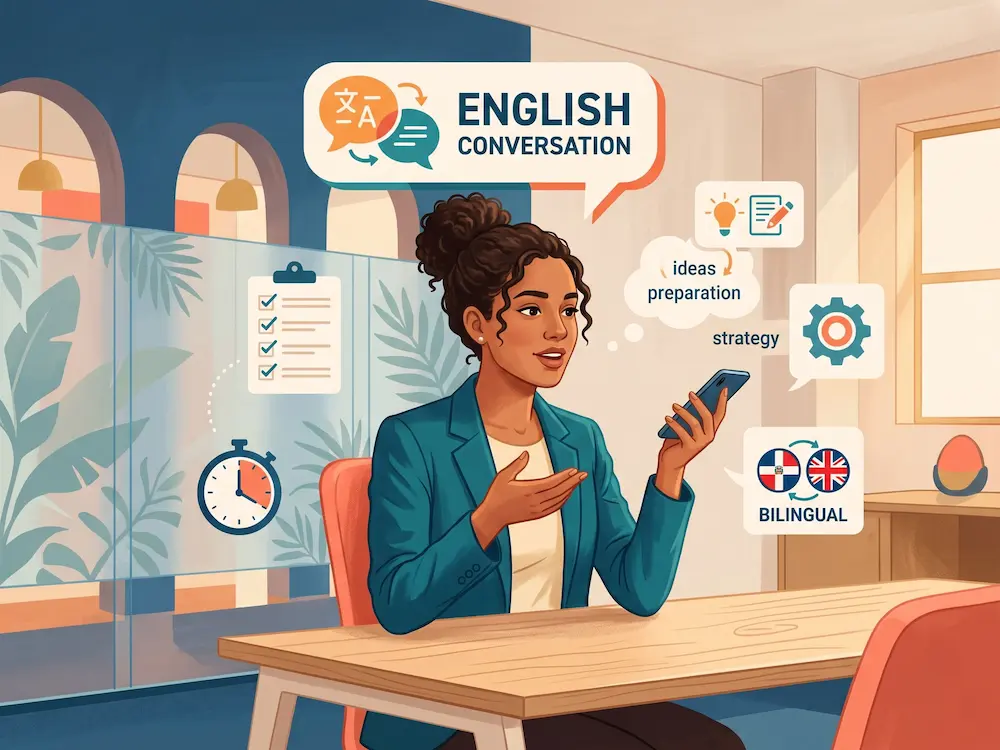

For many people, the most intimidating part of applying to a bilingual call center isn’t the application process itself, it’s the moment of the English interview. The nerves of speaking in another language in front of a recruiter can make even people with good English skills freeze up or give less clear answers than they’re actually capable of.
The good news is that most interviews in the call center industry follow a fairly predictable pattern. If you know the most common questions and practice your answers ahead of time, you can walk into your interview with a lot more confidence. In this article, we share the questions that come up most often and examples of how to answer them.
Before You Start: What Recruiters Are Really Evaluating
It’s important to understand that, in most cases, the recruiter isn’t just evaluating how grammatically “perfect” your English is. They’re evaluating:
- How well customers will be able to understand you.
- How comfortable you are keeping a fluent conversation going, even if you make a mistake here and there.
- Your tone, attitude, and communication skills under pressure.
With that in mind, the goal isn’t to sound like a grammar textbook, it’s to communicate clearly and confidently.
Question 1: “Tell me about yourself”
This will almost certainly be one of the first questions. It’s not about telling your whole life story, it’s about giving a brief, clear introduction of who you are professionally.
Sample answer: “My name is [your name], I’m from [your city], and I have experience in customer service and sales. I’m a fast learner, I enjoy helping people solve problems, and I’m very interested in growing my career in the call center industry.”
Tip: practice this answer until it feels natural, without sounding memorized. It should last between 30 and 45 seconds, no longer.
Question 2: “Why do you want to work in a call center?”
With this question, the recruiter wants to see if you have clarity about your motivations and if your interest goes beyond “I need a job.”
Sample answer: “I enjoy interacting with people and helping them find solutions. I also like the idea of working in a fast-paced environment where I can keep improving my English and develop new skills, like communication and problem-solving.”
Tip: avoid answers that sound purely financial (“I need the money”). Focus on skills, growth, and your genuine interest in the role.
Question 3: “What do you know about customer service?”
This question is meant to gauge whether you understand the basics of the job, even if you don’t have formal previous experience.
Sample answer: “Customer service means listening carefully to the customer’s needs, staying patient and polite, and finding the best solution as quickly as possible, even when the customer is upset.”
Tip: if you have previous experience (even informal, like helping out at a family business), briefly mention it as an example.
Question 4: “How do you handle a difficult or angry customer?”
This is one of the most important questions, because it evaluates how you handle pressure situations, something constant in the day-to-day of a call center.
Sample answer: “I stay calm and let the customer express their frustration first. Then I listen carefully, apologize for the inconvenience, and focus on finding a solution instead of getting defensive.”
Tip: never say you would “ignore” the customer or that you could get upset. Recruiters are looking for patience and emotional control.
Question 5: “What is your availability?”
This question seems simple, but many candidates lose opportunities by not being clear on their actual availability before the interview.
Sample answer: “I’m available to work full-time, including evenings and weekends if needed. I can start immediately.”
Tip: before the interview, define exactly which days and hours you can work. Being clear and flexible increases your chances of getting hired faster.
Final Tips for Interview Day
- Practice out loud, not just in your head. Saying your answers out loud helps you sound more natural.
- Find a quiet place with good signal, especially if the interview is over the phone or a video call.
- Don’t memorize word for word. It’s better to understand the general idea of each answer and express it in your own words.
- If you don’t understand a question, it’s okay to ask for it to be repeated. Saying “Could you repeat that, please?” is completely normal and shows good communication, not weakness.
Practice, Apply, and Land Your Next Opportunity
Preparing ahead of time can be the difference between a nervous interview and a successful one. Once you feel ready, you can explore and apply to available bilingual openings at the industry’s leading companies, all in one place.
Explore available openings on OVAjobs
Have questions about the interview process? Email us at recruitment@ovacasttalentsolutions.com or reach out via WhatsApp at (829) 807-1195